
China's Foreign Ministry has refuted allegations of providing military support to Iran, warning the US against imposing tariffs based on these accusations. The statement follows reports of Iran acquiring a Chinese satellite for targeting US military bases. Meanwhile, a rescheduled meeting between Presidents Trump and Xi Jinping is set for May.

The harsh truth is that the US is no longer a reliable partner, cautions Ramesh Menon.

Amritpal Singh Mehron, the primary suspect in the murder of social media influencer Kanchan Kumari, has been arrested after being deported to India from the Middle East. He was apprehended at Delhi's airport and is now in police custody.

Faculty recruitment is conducted directly by universities using global hiring standards while complying with Indian regulations.

'After that the burdens of an ageing population will be upon us, and the share of working age population will shrink.'

'We caught General Pervez Musharraf talking over the phone with his Chief of General Staff Lieutenant General Mohammad Aziz. Musharraf was visiting China; Aziz was in Rawalpindi.'

Precious metal prices, particularly gold and silver, experienced a significant surge in the national capital as investors sought safe-haven assets amid escalating hostilities in the Middle East.

The Indian equity market is set for an event-heavy week, with analysts pointing to the Reserve Bank of India's (RBI) interest rate decision, developments in the US-Iran situation, and crude oil prices as the primary determinants of market trends.

India's economy registered a robust 7.7 per cent growth in the fiscal year 2025-26, an increase from 7.1 per cent in the previous year, with the January-March quarter alone seeing a 7.8 per cent expansion.

A Middle East expert claims that President Trump's approach to Iran is endangering US interests in the Gulf region, with support for the Iranian regime growing amid US-Israel tensions.

Gold prices are expected to remain volatile next week as investors track geopolitical developments in the Middle East and key macroeconomic data releases that could shape the sentiment in the domestic market, analysts said.

'The flip side of this is that he won't hesitate to call out India if he thinks its policies are hurting US economic interests or border US foreign policy goals.'
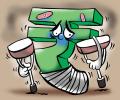
The Indian rupee weakened against the US dollar due to rising crude oil prices, geopolitical tensions in the Middle East, and foreign fund outflows.

Pakistan's Prime Minister Shehbaz Sharif has offered to host talks between the US and Iran to help resolve the ongoing conflict in the Middle East, following reports of Pakistan's involvement in backchannel diplomacy.
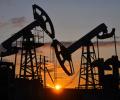
India's largest private refiner, Reliance Industries Ltd, successfully navigated a volatile energy market in the last quarter of FY26 by diversifying crude sourcing and demonstrating operational agility, particularly in response to geopolitical disruptions and cost fluctuations.

Donald Trump's inconsistent statements and actions regarding the conflict with Iran have drawn criticism and confusion, raising questions about American credibility and the direction of US foreign policy.

Vietnam is an emerging regional power and a closer relationship with Hanoi is closely aligned with Prime Minister Narendra Modi's Act East Policy, points out Dr Rajaram Panda.

The primary objective should be to figure out a way to grow at 7 to 7.5 per cent with inflation around 4 per cent. Any policy that can help us get there must be experimented with. Those that work should stay. Those that do not should go, suggests Karan Bhasin.

Dharmendra Pradhan's resignation is significant because it punctures, however slightly, the perception that the Modi government never retreats under pressure. Every long-serving government eventually reaches a point where every institutional failure is identified with the leader himself. Removing the minister may have prevented that political burden from falling directly on Modi. Whether it also resolves the underlying crisis is another matter, notes Ramesh Menon.

Pezeshkian urged American citizens to look beyond 'manufactured narratives', claiming the portrayal of Iran as a threat is driven by the military-industrial complex and Israeli political interests.

'Jews are very much safe in Iran. They are our brothers. There is a difference between a Jew and a Zionist.' A conversation around a tea table in Mumbai serves as an eye-opener for Syed Firdaus Ashraf.

Equipped with advanced weaponry, the HMS Anson is fitted with "Tomahawk Block IV land-attack missiles" with a range of 1,600 km and "Spearfish heavyweight torpedoes," providing formidable offensive capabilities.

The reopening of the Strait of Hormuz, following a ceasefire agreement between the US and Iran, is expected to significantly ease India's crude oil supply risks, lower freight costs, and reduce inflationary pressures, as global oil prices have already dropped.

Far from it; the country's resistance to the US, its nuclear ambitions, and its pursuit of influence and proxies across the Middle East are driven by a constant search for independence and security. Thus, Iran will never capitulate. Trump will learn this home truth ultimately, and it is going to be a humbling personal experience that may even destroy his presidency, predicts Ambassador M K Bhadrakumar.

In his resignation letter to US President Donald Trump, Kent called the conflict with Iran unjustified, contending that Washington, DC entered the war due primarily to pressure from Israel and its powerful American lobby rather than clear, direct threats to national security.
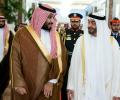
What began as a mentor-protege relationship between UAE President Mohammed bin Zayed and Saudi Crown Prince Mohammed bin Salman has now evolved into a broader contest over influence, strategy, and leadership in the Middle East, points out Asif Ullah Khan.

'Even if the war ends tomorrow, which is unlikely, and we go back to the pre-war status quo, the world will still need some time to get over the sudden shock of oil price increases.'

Protests were held from coast to coast, with massive marches in major cities and smaller gatherings in suburban and rural areas across both traditionally Republican and Democratic states.

If Iran and Oman choose to charge a fee for rendering services to vessels using their territorial waters, so be it. The US is indulging in an irrationally self-destructive act, notes Ambassador M K Bhadrakumar.

External Affairs Minister S Jaishankar stated that India has demonstrated resilience in the face of recent global shocks, including the conflict in West Asia, while speaking at the convocation ceremony of IIM Raipur. He emphasised the importance of building national capabilities to de-risk and develop leverage in a changing global order.
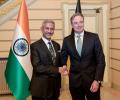
The era where nations thrived through rigid alignments is giving way to an age where the connective State defines power. For India, that era has arrived, points out Dr Nishakant Ojha.
The Indian rupee saw a significant appreciation against the US dollar following President Trump's suspension of military strikes against Iran and the Reserve Bank of India's decision to maintain its key interest rate. Market sentiment was further buoyed by positive comments from the RBI regarding the health of the banking sector.

It is time for India to step up and get Russia, China and Europe to agree to a joint appeal to all combatants. Time is of essence, tomorrow may be too late, asserts Colonel Anil A Athale, former head of the history division, ministry of defence.

There are enough people at the top decision-making level in Tehran who are still willing to negotiate, provided Trump can create the right setting for the negotiation to acquire a dynamic of its own, points out Ambassador M K Bhadrakumar.

The Congress party has criticised the Modi government over Pakistan's involvement in US-Iran peace talks, calling it a 'monumental setback' for India's diplomatic efforts.

'Saudi Arabia's standing internationally and in the West is going to take a big hit even if MBS is dethroned.'

External Affairs Minister S Jaishankar discussed the West Asia conflict and its impact on energy supplies with his Russian counterpart Sergey Lavrov and EU's Foreign Policy chief Kaja Kallas.

Indian stock markets tumbled sharply with the Sensex falling 800 points and nearly 4 lakh crore wiped out in a single session. Here are the 6 key factors, including rupee weakness and global cues, behind the crash.

Indian stock market benchmark indices Sensex and Nifty experienced a significant decline, driven by escalating tensions in the Middle East and rising crude oil prices.

Even if there is an early agreement on a cessation of hostilities in West Asia, the price shock will not go away easily, points out A K Bhattacharya.
